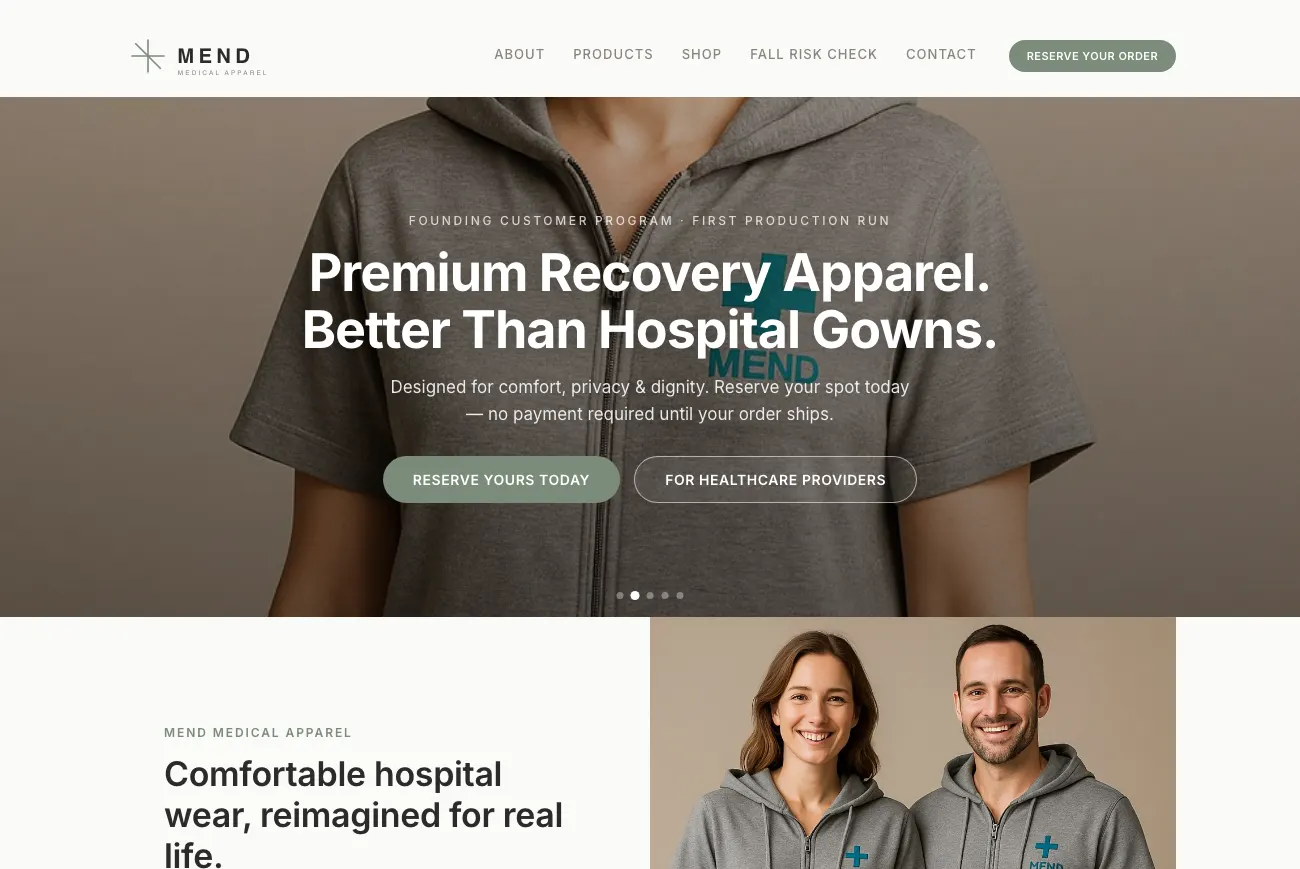
The work
Soft, washable recovery gowns, residential nurse scrubs, medical-grade compression socks, the AirGuard™ fall-detection collar, and connected devices — a brand for patients and the people caring for them. I led it from discovery through build: stakeholder workshops, information architecture, the Figma design system, storefront architecture, and the code.
The storefront is hand-written static HTML, CSS, and JavaScript on Vercel — no framework, no build step for the site proper. That is a deliberate architectural call. A catalogue this size does not need a bundler, and skipping one buys near-instant loads and a site that will still build in five years.
The exception is the fall-risk assessment tool, the site’s lead magnet: a React application scoring fall risk against WHO data, with charts and a regional model. It runs through hand-written React shims rather than a bundler, so one interactive tool did not drag a toolchain onto the whole project.
- Seven product detail pages — gowns, scrubs, compression socks, AirGuard™ collar, MEND Pulse, MEND Oxi, and the MEND App
- React fall-risk assessment tool built on WHO fall data, wired to a serverless lead-capture endpoint
- Full technical SEO program: www unification, clean product slugs, an image pipeline, security headers, sitemap and robots
- Static-first architecture — no build step for the storefront, no framework lock-in